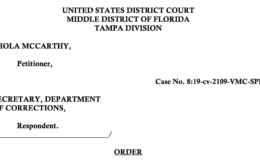
Use of iPhone to Find a Bank to Rob and Use of iPhone Police Scanner App Leads to Conviction (McCarthy v. Dept. Corrections)
A Florida jury found Shola McCarthy of robbing a bank and using a police scanner in violation of 843.167(1)(a), Fla. Stat., which prohibits interception of police radio “to assist in committing a crime or to escape from or avoid… arrest… In connection with the commission of such crime.” In 2013, …

Trump v. Vance: Initial Breakdown of the November 2, 2019 Second Circuit Opinion re: Production of Tax Returns
The Second Circuit issued its opinion this morning in Donald J. Trump v. Cyrus Vance, Jr. in his capacity as District Attorney of the County of New York and Mazars USA, LLP. You can find the 34-page opinion here. The following is an initial, rough outline of the court’s opinion. …

When Can You Withdraw Consent for a DUI Blood Draw in Florida? (Florida v. Jennifer Ivie)
A Florida driver was involved in an accident, taken to the hospital, and interviewed by police who were conducting a DUI investigation. The officer spoke with the driver, advised her of her Miranda rights, conducted at least one visual test, and otherwise detected signs of intoxication. The officer asked the …
“Valid Grounds for Employment Action” Deemed Not Enough for Stalking Injunction under F.S. 784.048 (Klenk v. Ransom)
Florida’s First District Court of Appeal held today that a respondent’s behavior may be enough for an “employment action” (presumably, for termination due to sexual harassment) but, in this case, was not enough for the “exacting standard” for an injunction against stalking under Florida Statute 748.048. The case is Joseph …

U.S. v. Yujing Zhang — April 8, 2019 Filing of Passport, Articles, Receipt, Ad for Mar A Lago event
The unusual case of U.S. v. Yujing Zhang continues in the federal courthouse in West Palm Beach, Florida. On the same day as a well-covered April 8 pre-trial detention hearing, the Defendant filed a number of documents: Two (?) passports and a visa; Receipt; Article (translated): “Trump said he is …
Can A State Search Cellphone of Person on Probation Without Warrant or Probable Cause? (Florida v. Mark Leroy Phillips, Sr.)
Florida’s Fifth District Court of Appeal considered the question whether, under the Fourth Amendment, the State of Florida could search the cellphone of a man on probation for child abuse convictions (and who was a registered sex offender) when there was no warrant or reasonable suspicion. The court, in Florida …

In Butoh Dance / Suicide Case, Court Rules that Emails & Skype into Florida Create Jurisdiction Over Katsura Kan, Dance Instructor
Can Florida obtain personal jurisdiction over someone just because he/she sent emails or Skyped with another person in Florida? In the unusual case of Tibor Stern, as personal representative of the Estate of Sharon Stern v. Terugoshi Kotoura a/k/a Katsura Kan, the answer is yes. The Facts of the Case …

Florida Fourth District Recedes From Two Prior Opinions re Miranda Rights
Florida’s Fourth District Court of Appeal receded from two opinions in 2004 relative to how Miranda rights are given. For lawyers and the general public alike, there’s always room for a little refresher on Miranda. After all, even the stodgy U.S. Supreme Court was hip enough in 2000 to note that “the …
Nine Ways that Companies Get Hacked
This one page article explains the 9 most common ways your clients and companies get hacked — in a single page Palm Beach Bar article. Don’t know a DDOS from a SQL attack? Brute force or a reverse brute force. Read the kama sutra of hacking-for-lawyers, here.
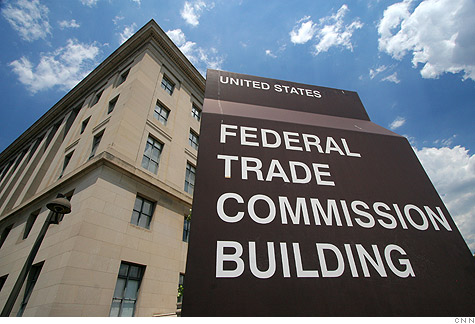
The Government Can Sue Your Company For Negligent Cyber Security
The recent cases of FTC v. Wyndham and In Re TerraComm and YourTel America, we have seen that federal government agencies are pursuing companies who have negligent cybersecurity standards — and the government is winning. In fact, the government need not point to specific statutory violations to win these cybersecurity cases …

National Archives: October 2017 Release of Last of JFK Assassination Records
In April 2015, the US National Archives explained at their NDCPrioritization: What Secrets Do People Want to See? conference how the release of the remaining JFK records will be accomplished. By way of background — that “background” being a cry primarily from FOIA fans and conspiracy types to free the …

Was There a Numbers Station in Palm Beach?
Was There a Numbers Station in Palm Beach County? [PDF of June 2015 Palm Beach Bar article is here] In the past two years, we have been increasingly exposed to the “cool” side of math: cryptography and encryption. Algorithms were not something you likely learned in …
Florida Second DCA: ShesAHomewrecker.com Case
Florida’s Second District Court of Appeal recently ruled in Melissa Leach v. Tara Michelle Kersey that, under case-specific facts, sending messages, Facebook friending, and posting about another person on She’s A HomeWrecker.com were not “cyberstalking” under Florida Statute 784.0485. Under the cyberstalking statute, there must be at least two incidents …
One Year After Snowden: How Safe Are Your Calls and Emails?
Back in April 2014, I spoke to the Palm Beach Chamber of Commerce about the security of emails and phone communications in the business world (materials are here). This article, “One Year After Snowden: How Safe Are Your Calls and Emails?,” summarizes the key Snowden disclosures over the last year …
In Re Erik T. Voorhees (settlement): Not Really a Bitcoin Case
The hot bitcoin-related story involves the settlement between the Securities and Exchange Commission (SEC) and bitcoin-advocate, Erik T. Voorhees. This case involves bitcoin but is not about bitcoin. Stated differently, this case is not an attack on bitcoin. It simply involves charges of a crime unrelated to the virtual currency …